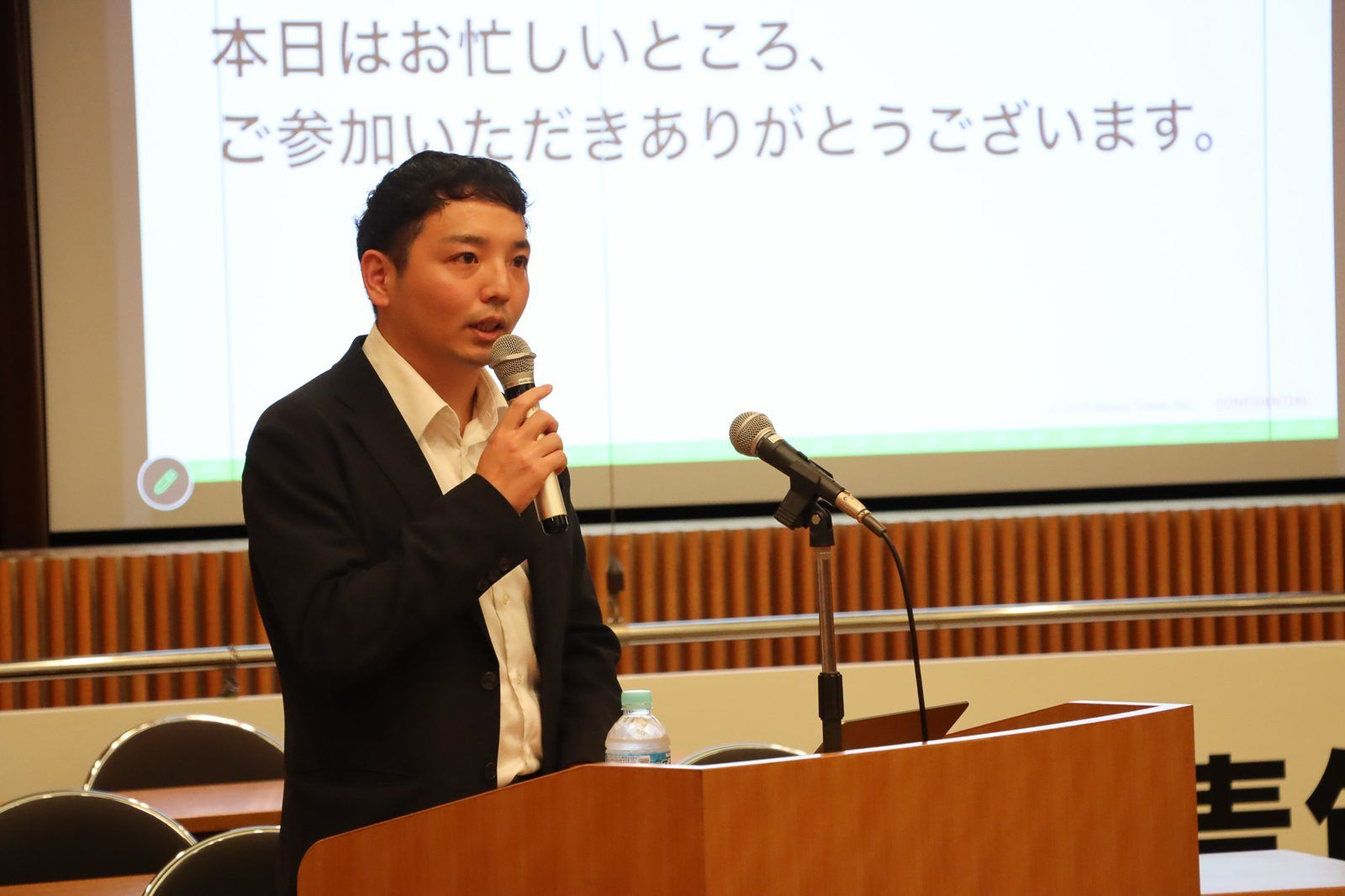
Hi, this is Yuki Sodeoka of the NEWT AI Marketing team. This article looks at how hotels and ryokan can introduce a chatbot.
Most of the inquiries that reach the front desk in the evening or at night are routine questions about where to park or when you open. Each one stops a staff member in their tracks, and sometimes the guest standing in front of them has to wait.
Do you find yourself giving the same answer, by voice or in writing, several times a day?
Introducing a chatbot goes in three stages: decide which inquiries to hand over, prepare the information and go live, and then watch the conversation logs after launch to help it grow. Rather than treating adoption as finished once the chatbot is on the screen, we recommend counting the improvement work after launch as part of the process.


Hiroki UkedaExecutive Officer, CBO, Reiwa Travel
Joined Loco Partners in 2018, leading the launch of its vacation-rental (minpaku) business—listing 600 properties a year and winning the company's annual MVP award. He went on to lead a 7-person new-business sales team in eastern Japan and managed major foreign-owned hotel chains in the Tokyo metropolitan area. In April 2020 he co-founded TASTE LOCAL and drove its growth, and joined Reiwa Travel as an Executive Officer in 2021.
Ready to try NEWT Chat for yourself?
The free trial needs no credit card. See adoption results and pricing details in the guide.
Where chatbot adoption stands: the smaller the property, the slower it is
Across the lodging industry, the use of guest-service tools differs by size. According to a Japan Tourism Agency survey, the chatbot adoption rate among lodging operators is 15.1% for those with 1,001 or more employees and 12.8% for those with 101 to 1,000, but only 6.5% for those with 51 to 100 and 3.6% for those with 50 or fewer. The same survey notes that larger operators adopt more, while adoption has not advanced among small and micro businesses.

On the numbers alone, adoption looks like a high hurdle for small properties. But the Japan Tourism Agency's IT Utilization Handbook for Lodging Facilities (March 2026) says that IT tools include free and low-cost options, so you can start small and see the results easily.
Step 1: Decide which inquiries to hand over
The first task in adopting a chatbot is to separate the work to automate from the work people should keep. The Tourism Agency's handbook says the areas where you introduce IT should be decided with the values and character of your property in mind, and warns that replacing work whose value lies in being done by people can lower service quality. On the other hand, it describes reservation desk work, which does not involve meeting guests in person, as relatively cost-effective for IT, because it involves a lot of data exchange with outside parties and a certain amount of workload.
To protect the value that people provide, we recommend starting by writing out the questions left in the past month or so of emails and phone memos, then sorting them along two axes: how often they come up, and whether the answer is fixed in advance or needs individual handling.

Questions about opening hours, where to park, check-in and check-out times, and facility guidance come up often and have a single answer, so they are good to leave to the chatbot. Consultations where you need to hear the guest's circumstances before deciding, and requests that call for special consideration, are better handled by people face to face. Rather than automating by force, draw a clear line between what the chatbot handles and what people handle.
Step 2: Prepare the information and go live
Once you know what to hand over, prepare the information the answers will be based on and publish it.
You also choose the type of system at this stage. There are two kinds: a scenario type, which guides guests to an answer by having them pick from options you have prepared in advance, and an AI type, which reads the meaning of whatever the guest types freely and answers. We recommend choosing the one that suits the range of questions your property receives and the effort you can spend on managing it.
Once the system is chosen, gather the facility information that the answers will rest on. Examples of what to load are three things: the content of your website, a PDF guide to the facility, and a price list. If outdated information is registered, it leads to wrong answers, so replace seasonal opening hours, planned repairs, and the like with the latest details.
Alongside registering information, you will want to set up how things run on site. Design a path to hand over to a phone call or an inquiry form at the front desk when a question arrives that the chatbot cannot answer, and decide who is mainly in charge so that updates do not get left behind.
After preparation, place it wherever you want to reach guests: the website widget, your official LINE account, a QR code on an in-house information leaflet, and so on. Costs vary with the volume of inquiries and the range of features, so the details of pricing are covered in a separate column.
Where NEWT Chat Fits: Website Widget, LINE, In-Room QR, and Internal UseNEWT Chat doesn't have to stop at a widget on your website. It extends to LINE, in-room QR codes, and internal staff use. We lay out all four use cases—who each one serves, what it's for, what it delivers, and which properties it suits./en/aichat/column/newt-chat-use-cases Chatbot Costs in 2026: Pricing Models and How to Choose for Hotels and RyokanWe checked the official pricing of nine chatbot services. The cheapest paid plan starts at ¥1,500 a month and the cheapest plan where AI answers starts at ¥4,000. This guide covers setup fees and running costs such as FAQ upkeep, with hotels and ryokan in mind./en/aichat/column/hotel-chatbot-cost

Ready to try NEWT Chat for yourself?
The free trial needs no credit card. See adoption results and pricing details in the guide.
Step 3: Watch the conversation logs after launch and help it grow
A chatbot does not need to be finished on the day it goes live. Rather than trying to prepare exhaustive Q&As from the start, you raise its accuracy by looking at the conversation logs as they build up.
This approach also applies to small hotels and ryokan where a few people answer inquiries. GooS Co., Ltd., which runs the sauna facility Tatsuki Sauna in Okazaki, Aichi, has three staff who handle Instagram DMs, email, and the website form, with no phone line. Most of what they receive was routine questions: where to park, opening hours, how busy it is, and whether a reservation is needed.
The company introduced NEWT Chat, and the preparation was little more than loading in its website URL. On how they grew the FAQ after launch, Ryota Masuda, Representative Director, says:
Early on, there were some questions it couldn't answer well, so I told the staff to collect the questions guests often asked, and we registered the FAQs together. A few of them pointed out things like "shouldn't it say this instead," and having it learn from that meant we could cut one round of back-and-forth with guests, which was good.
— Ryota Masuda, Representative Director, GooS Co., Ltd. (from the customer case)
From the conversation logs, Mr. Masuda noticed that many questions were about what to bring and how things work: whether it is men-only, whether tattoos are all right, and whether you need to bring a swimsuit. He took the fact that questions arrived even about information he thought he had already put out on the website and social media as evidence that the property's guidance path was lacking. Besides registering the missing answers to make the bot's replies more accurate, the logs can also be used to revisit the guidance itself, for example by reviewing the wording on the official website where guests tend to stumble.
A sauna facility with no phone line: bringing scattered inquiries together in chatGooS Co., Ltd. runs Tatsuki Sauna in Okazaki, Aichi, without a phone line — inquiries arrive through Instagram DMs and email instead. We asked the small team behind it, three staff plus twelve part-timers, why they adopted NEWT Chat and what changed afterwards./en/aichat/case/tatsuki-sauna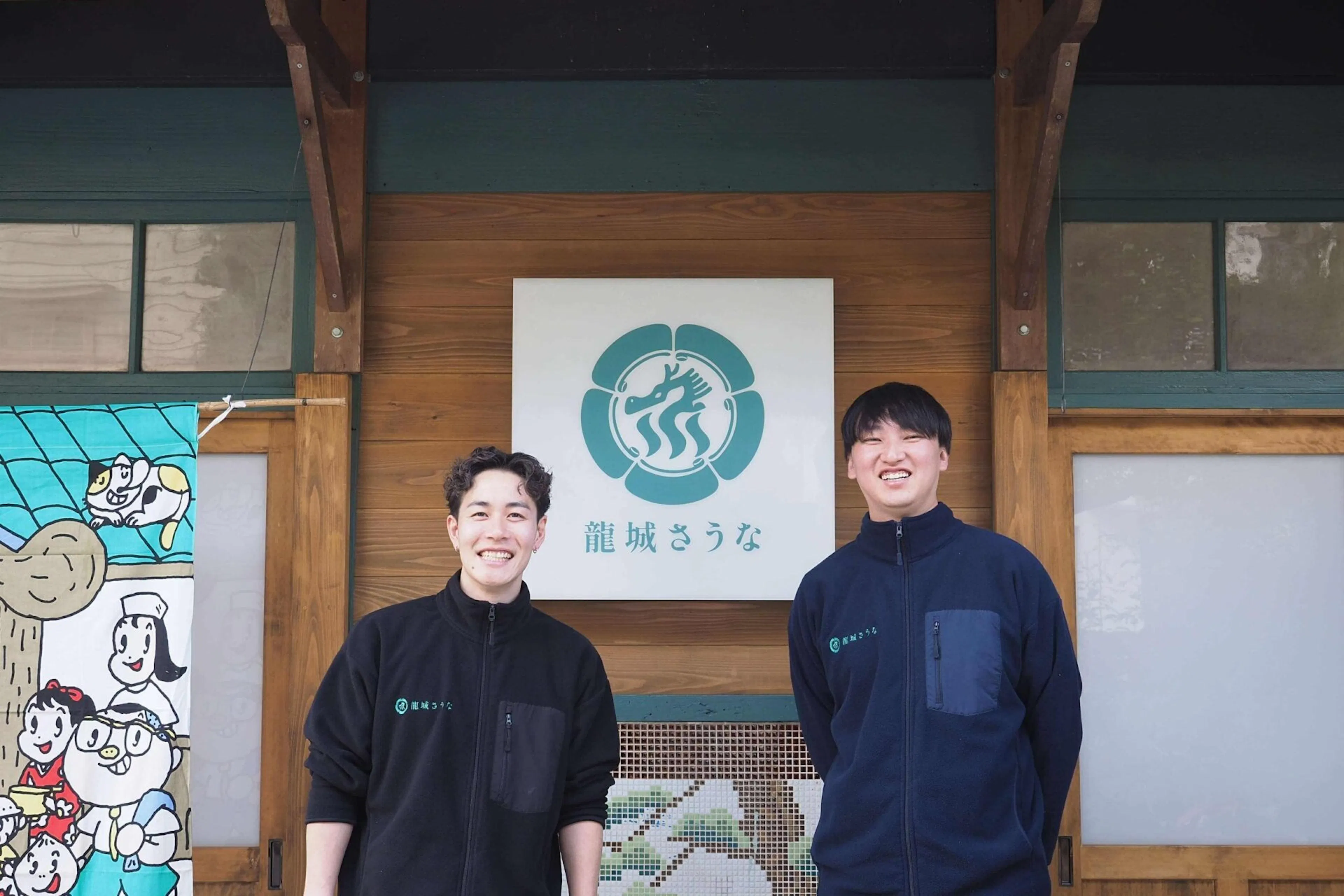
Four points for making adoption stick
The Tourism Agency's IT Utilization Handbook for Lodging Facilities sets out four points for making adopted IT stick. Applied to a chatbot, they look like this.
-
Shorten the period of running paper and IT side by side
Running both causes double handling in copying and checking, and the burden on staff grows. The handbook says that setting a deadline for the move and switching over all at once turned out to be lighter. With a chatbot too, settle on a single master source of information and move away from the old procedures quickly.
-
Stop the existing work once you have introduced it
If an owner or leader does not declare "we can stop doing this task now," the work only increases and becomes a source of frustration. Whoever is responsible draws the line on what to let go of, for example by not replying individually to the questions you have handed over.
-
Do not keep forcing a tool that does not suit your property
If a tool does not fit your guests or your brand, even an excellent one can backfire. What matters is being able to decide to pull out. You check how the tone of the wording and the fit with your guests are working through the conversation logs after launch.
-
Do not hand everything over to the vendor
It matters that owners and leaders handle and understand the tool themselves. If you do not understand how it works, you cannot give staff accurate instructions. Build a setup where your own team knows the steps for making corrections and how to check the logs, so you can adjust operations yourselves.
Summary: introduce a chatbot by starting small and helping it grow
Introducing a chatbot at a hotel or ryokan goes through three stages: decide which inquiries to hand over, prepare the information and go live, and watch the conversation logs after launch to help it grow. Rather than asking for a lot from the start, we recommend starting by automating a small number of frequent, routine questions.
At the same time, being clear about when to stop existing work, and continuing to tend the chatbot yourselves rather than handing it all to the provider, are important points for making it stick. Treat the day you go live as the starting point, pick up guests' questions from the conversation logs, and approach it with the view that you grow it after you publish.
If you are starting a chatbot at your hotel or ryokan, consider NEWT Chat
NEWT Chat is an AI chat service for the hospitality industry that reads the information on your official website and automatically answers guests' inquiries.
The main features of NEWT Chat:
- Built for hospitality: an AI chat specialized for hotels, ryokan, tourist facilities and activities, DMOs and tourism associations, and restaurants. It comes pre-trained on industry knowledge and was developed by NEWT, which knows the industry well.
- Setup in as little as two minutes: all you need is the URL of the official website where you want the chat. The AI reads and learns from the site automatically, and installing it takes copying and pasting a snippet of code.
- Document import and Q&A creation: on the Casual plan and above, you can upload facility guides and price lists as PDFs or images for the AI to learn, so you do not have to register Q&As one by one. Registering and auto-generating Q&As is also supported.
- 40+ languages: when an overseas guest asks a question, the AI detects the language and replies in the same one. All-language support on the Hobby and Casual plans is available for a limited time.
- LINE integration: LINE integration is available on the Casual plan and above.
- Logs and conversation analysis: questions the AI could not answer stay in the log, so you can review them and add to the AI's knowledge. Conversation analysis shows which inquiries come up most often.
Pricing is a monthly fee based on the number of messages the AI generates. Plans scale with usage.
| Plan | Monthly fee | Messages per month | Notes |
|---|---|---|---|
| Hobby | Free | 200 | 1,000 in total |
| Casual | ¥5,800 | 500 | 5,000 in total |
| Premium | ¥17,800 | 3,000 | — |
| Suite | ¥34,800 | 10,000 | — |
| Suite+ | On inquiry | On inquiry | — |
Monthly fees exclude tax and are as of October 2026.
A support package that covers tag installation through initial setup is also available (¥300,000 lump sum, tax included, as of October 2026), which keeps the workload of getting started low.