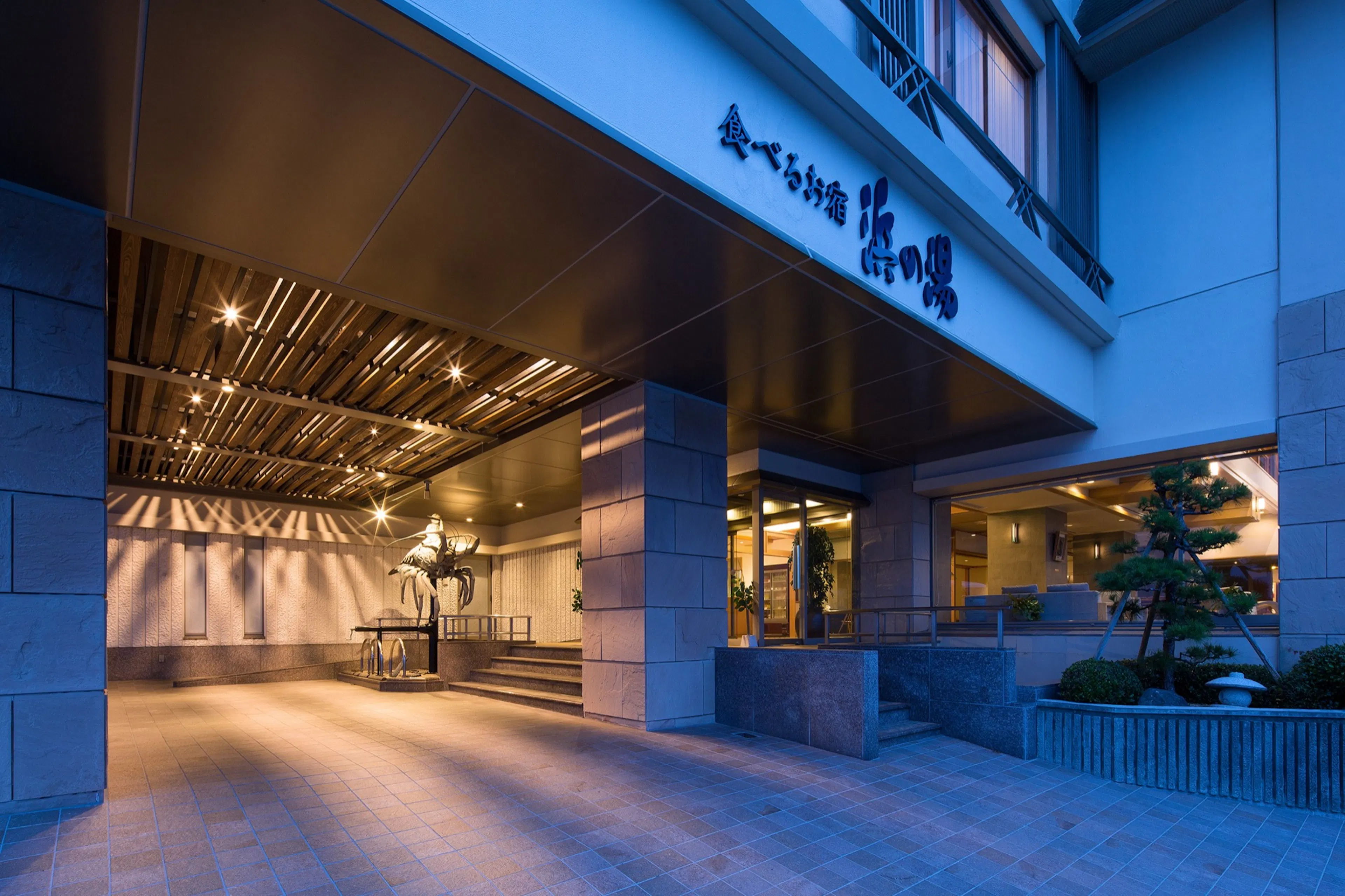
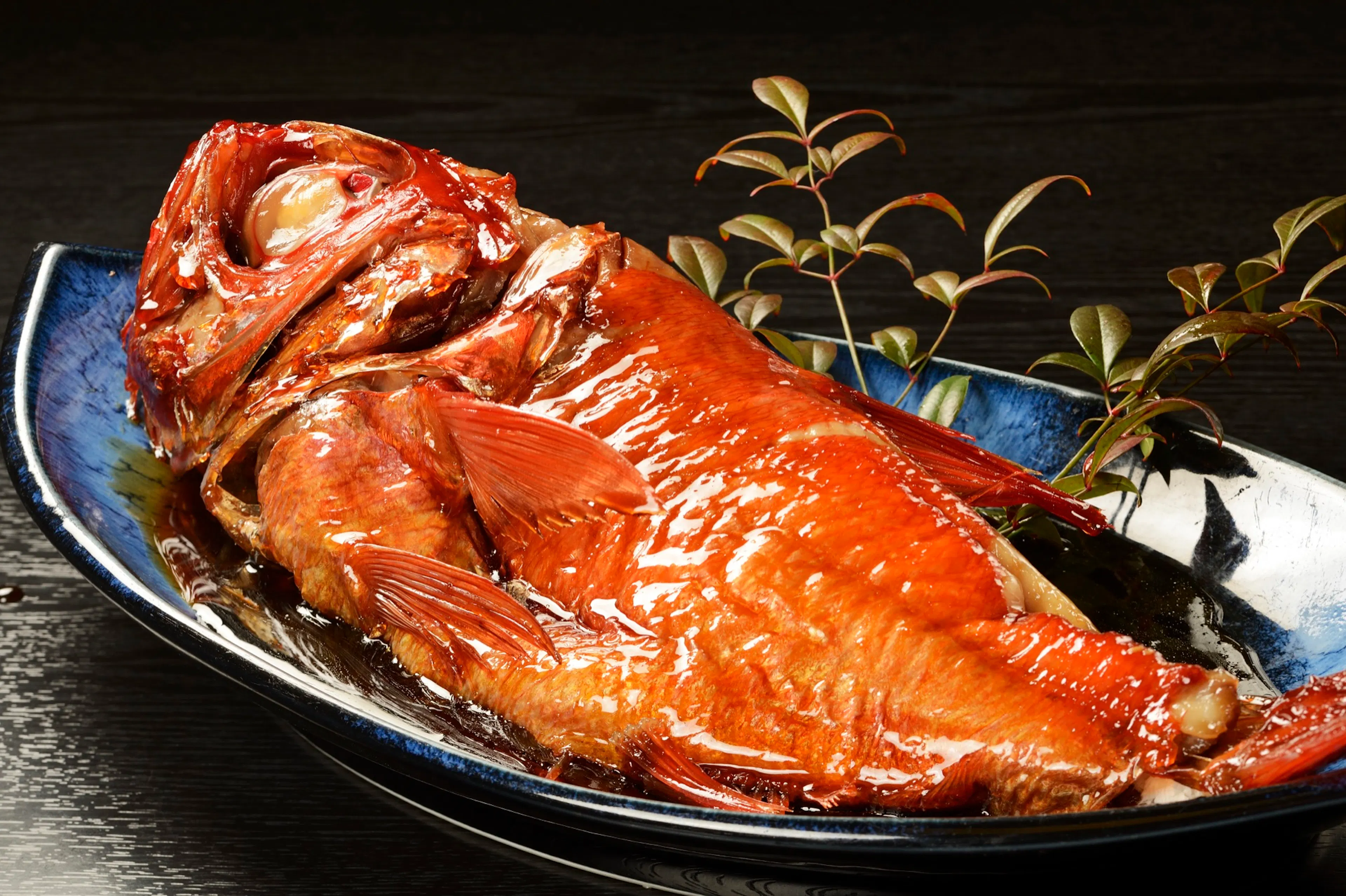
Taberu Oyado Hamanoyu, in Izu Inatori Onsen, is a long-established ryokan known for its devotion to food — symbolized by whole simmered golden eye snapper and lavish sashimi boats — and for preserving ryokan traditions such as a dedicated attendant for every guest and meals served in the room. Its repeat rate is around 60%, and on any given day roughly a third of the guests in the building are returning visitors.
At the same time, the reservations desk was fielding around 2,000 calls a month. "A call before arrival is a valuable point of contact with our guests" — the very calls they refused to give up were piling up as a burden on a team of four, with three on duty at any given time.
Since adopting NEWT Chat as one of its earliest customers, the ryokan has cut roughly 400 calls a month, or about 17 hours of handling time. That time now goes to anniversary surprises, allergy consultations, and other forms of "hospitality only people can give."
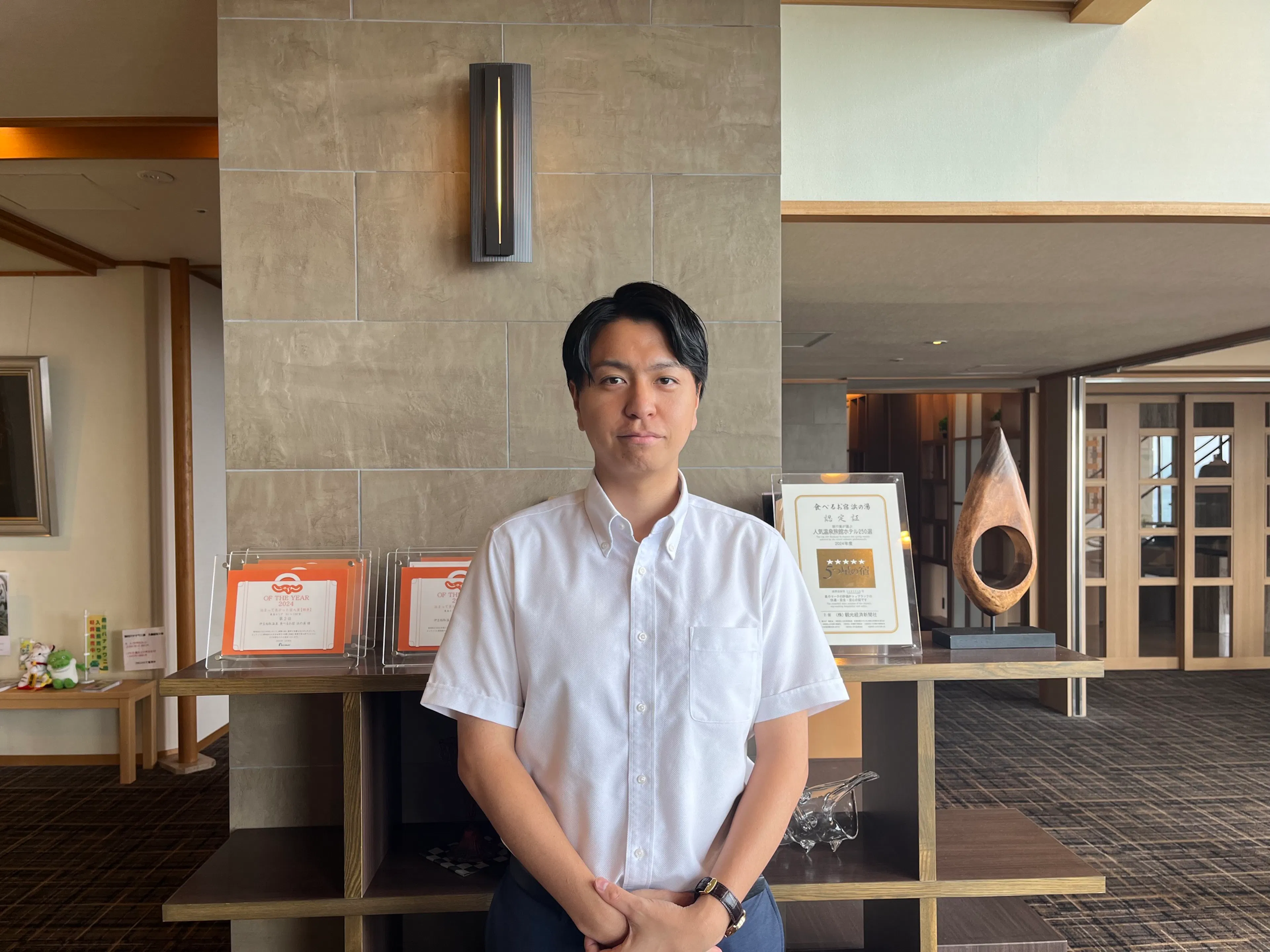
We spoke with Executive Director Tatsuya Suzuki about everything from the background to the changes on the floor. (Interviewer: Hiroki Ukeda, Reiwa Travel)
Ready to try NEWT Chat for yourself?
The free trial needs no credit card. See adoption results and pricing details in the guide.
"After Hamanoyu, you won't want sashimi for a while": chosen for its food, and for its people
— This is the first in our series of NEWT Chat customer stories, and we really wanted to start with Hamanoyu. Could you tell us about the thinking behind "Taberu Oyado" (the eating inn), what you value most, and a little about the size of the property and your guests?
Suzuki: We didn't always have beautiful rooms like today. We started as a genuinely small inn with about 20 guest rooms. Even then, we were fortunate to have many repeat guests, and what they always told us was, "After coming to Hamanoyu, you won't want sashimi for a while." That's how generously we used local fish in our cooking. "Whatever else, we want guests to leave satisfied with the food" — running the business on that belief is the story behind the name Taberu Oyado.
What we value most, still today, is being an inn where guests can feel and enjoy authentic ryokan culture. The clearest examples are the dedicated attendant system and in-room dining, which we have kept going even in this day and age. I believe those are structures found nowhere but Japan, and on top of them we cherish the warmth that only people can bring — that is our hospitality.
We have somewhere between 90 and 100 employees. Our guests span a wonderfully wide range, from people in their twenties to those in their fifties and above. Inbound guests are under 10%; because we sell in a way that makes it easy for Japanese repeat guests to book, the majority of our guests are domestic. Of those who visit once, around 60% come back a second time. Even on a quiet day, more than a third of the guests in the building are repeat visitors.
Around 2,000 calls a month: when a "valuable point of contact" becomes a burden
— You adopted NEWT Chat very early on. Where exactly were you feeling the strain in handling inquiries? We'd love to hear about the team receiving those calls, too.
Suzuki: It's genuinely simple: the number of calls coming into the reservations desk. That was our absolute pain point. That said, our reservations team believes that speaking with guests before they arrive is itself a point of contact. If we hear about the purpose of the trip and any requests in advance, we can put that to work and deliver even better hospitality when they arrive. That's exactly why we value the phone.
Some properties now take bookings online only, but our stance is "please, call us by all means," and we also make a pre-arrival confirmation call to every single guest a week before their stay. On the receiving side we have four reservations staff, with three on duty at any given time. The front desk only takes internal calls from guests already in the building, so essentially every outside call goes to the reservations team.
Among those are questions we could have answered instantly if the guest had looked at our website. Even so, we give the standard greeting, listen to the inquiry, answer it — and however short the call, one call is one call, and it takes that much time. I felt this was something we could solve, but I was still working out how.
"Can it really answer properly?" The single deciding factor that outweighed the doubts
— With so many AI chat tools and chatbots around these days, what was your impression at the time? We'd also like to hear why you decided to adopt it, and how the team reacted.
Suzuki: Very simply, "can it really answer properly?" And beyond that, I did worry about whether it was truly all right to lose some of the contact that involves people. That was the bigger concern.
We decided to go ahead because when a call is about something a guest could have checked on our website, the time we get to spend with them is limited anyway. If we hand that to chat, then in our pre-arrival calls we can take the time to fully understand requests like "I'd like to arrange a surprise" or "I want to talk through an allergy in detail." We concluded we could spend our time on what really matters. Concentrating the reservations team's energy where a person needs to be involved was the single biggest deciding factor.
Honestly, the team was quite welcoming. If anything, we'd already heard voices saying, "These tools exist — why don't we have one?" So when we said we were actually doing it, there was no pushback at all.
Ready to try NEWT Chat for yourself?
The free trial needs no credit card. See adoption results and pricing details in the guide.
Everything you'd want to see was already there: the admin screen and answer accuracy
— Having used the admin screen yourself, how did you find the features and the accuracy of the answers?
Suzuki: I'm not saying this because it's an interview — I mean it honestly: it's very easy to use. What appears on screen is simple, and when I go to look at the data, everything I'd hoped would be there really was. With most systems you end up thinking, "Can't it do it this way?" or "I can't see this situation." None of that came up here.
The accuracy of the answers is high, too. Getting the initial information in was of course work, but once that's done the quality is excellent. Rather than being told to start from zero, we began from a state where the information on our website had already been read in, so the rollout went smoothly. The feature that surfaces questions it couldn't answer in the admin screen, so you can add them right away, is easy to understand as well. It really is easy to use.
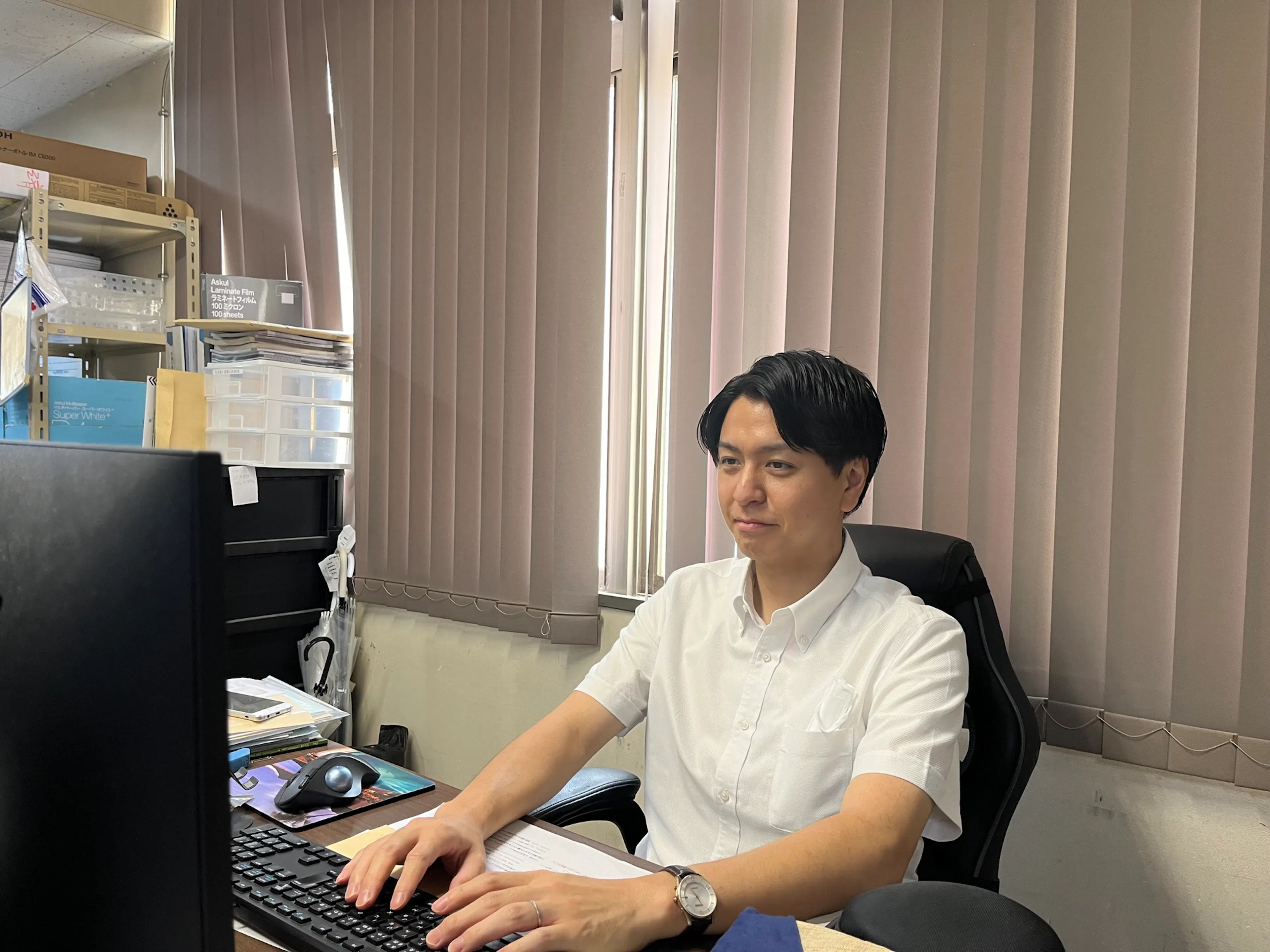
About 400 fewer calls and 17 hours saved a month, with the remaining calls only people can answer
— How has day-to-day work changed since the rollout? Chat is now handling around 3,000 conversations a month — we'd love to hear the numbers and how guests have responded.
Suzuki: Call volume really has come down. Specifically, inbound calls went from around 2,000 a month to about 1,600 after the rollout. In terms of handling time, that's a saving of roughly 17 hours a month.
The content has changed too. Questions a generic FAQ could answer have fallen away, and what's left has shifted more and more toward detailed matters only our staff can address. Guests check what they need on chat and then bring the deeper questions to us by phone.
As for guest reactions, there hasn't been a single negative comment. I'd assumed there would be a few, but there have been none at all. What surprised me was that after we put chat on the website, we saw several hundred conversations almost immediately. I'd honestly assumed the number would be far lower, so it struck me as proof that guests had been looking for an easy way to ask questions.
What the inquiry data revealed: an "anniversary inn," and the pastry chef it led to
— What did the inquiry data reveal, and did it lead to anything new?
Suzuki: It confirmed something we'd sensed. Looking at the content and history of the questions, it's clear how many guests come to us wanting to celebrate someone on a special day — an anniversary, a proposal. It made me realize we need to think harder about what we can offer them.
So recently we actually hired a pastry chef. Beyond serving a cake made in-house for an anniversary, things like message plates become easy to prepare. It became the trigger for new ideas about delighting guests in ways we simply couldn't before. This is an area we want to expand much further.
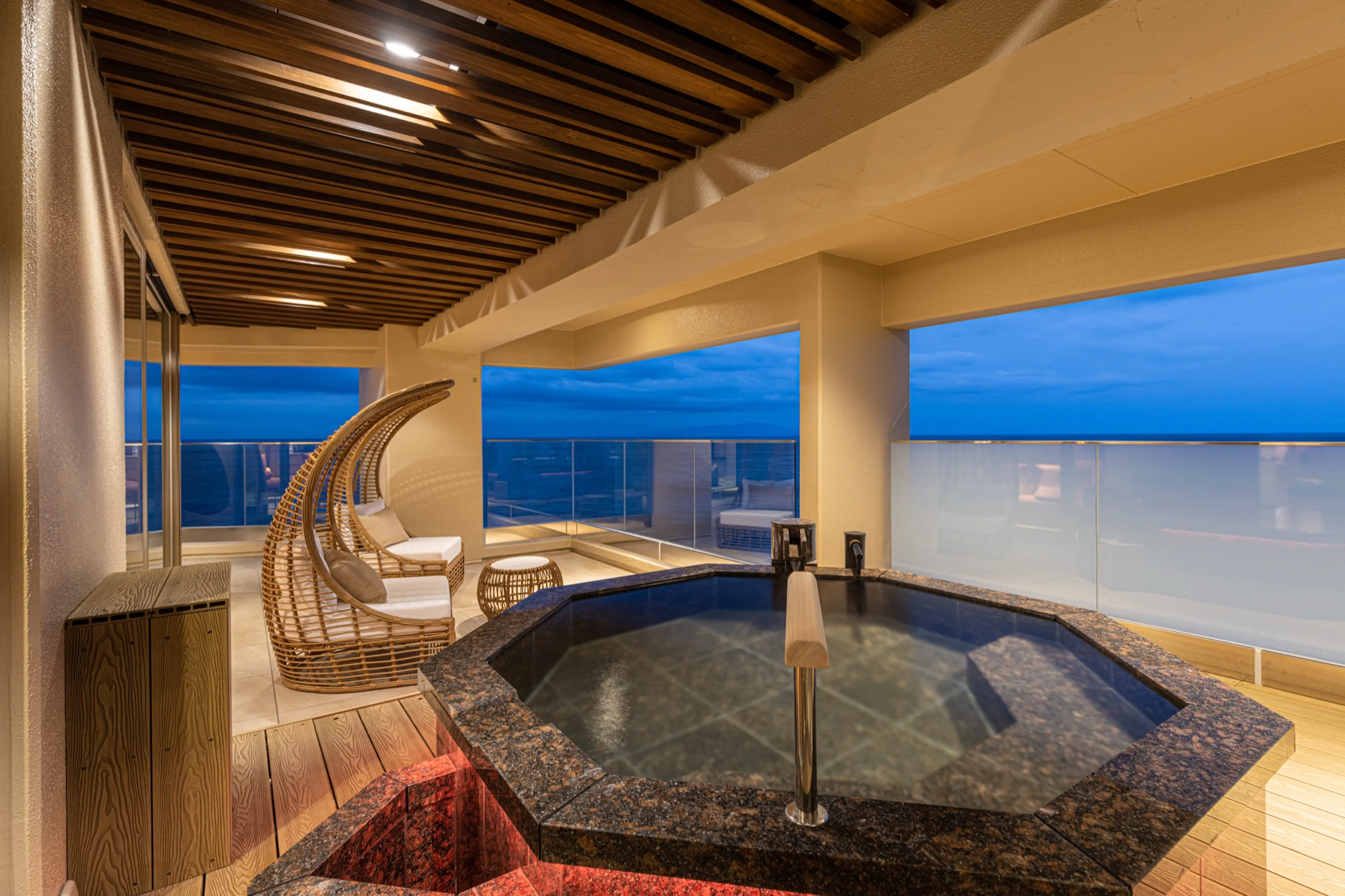
AI voice is next: why he'd tell peers "you should absolutely use it"
— Finally, how do you plan to use it going forward, and how would you recommend it to others in the industry?
Suzuki: What we're weighing right now is NEWT Voice, released in July. We're an inn that has always valued speaking with guests by phone, so what our president and I keep discussing is how to keep the current quality of service exactly as it is while giving staff more time for what guests are genuinely troubled by and what makes them happy. We want to apply that same thinking everywhere, not just on the phone.
If I were recommending it to someone in the industry, I'd say you should absolutely use it. It's so simple and clear to operate, and it's a tool guests find easy to ask questions with, so it fits the times perfectly. Productivity goes up and it's more convenient for guests. On top of that, the questions we receive reveal what guests latently want, and we can feed that into the services we build next. That may be the biggest benefit of all.
— Productivity rises, guest satisfaction rises, and it all feeds back into hospitality. It's been a genuine pleasure to hear. Thank you so much for your time!
Note: Information about the services and the property in this article reflects the time of the interview and may differ today.