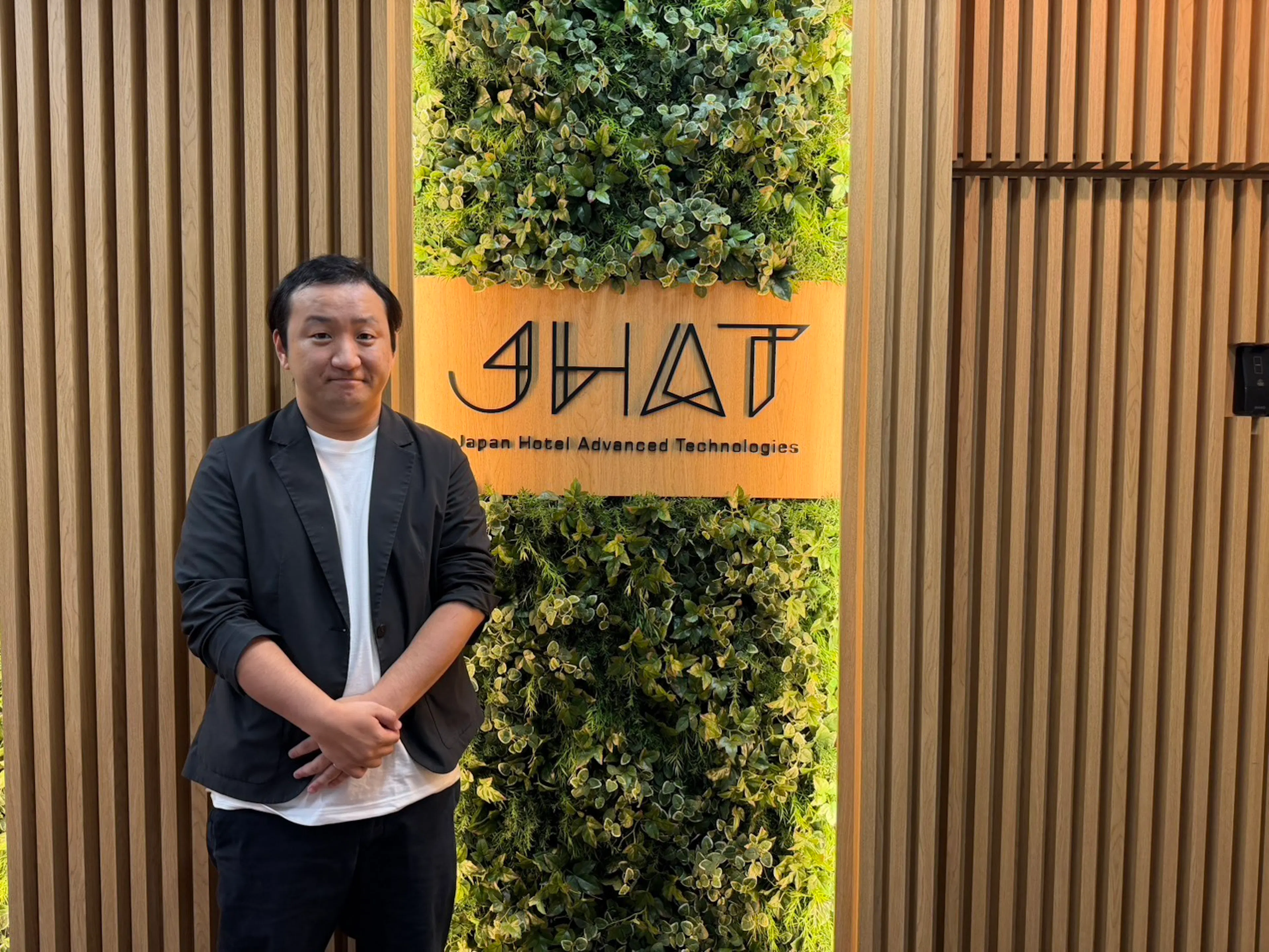
nine hours Co., Ltd. runs the wellness capsule hotel chain "nine hours" at 14-plus locations in major cities nationwide, built around the concept of "1h (shower) + 7h (sleep) + 1h (getting ready) = 9h."
Each property is run by a small team as a matter of policy, which made it hard to reply to inquiry emails right away.
After adopting NEWT Chat, the company achieved consistent answer quality through AI, and started seeing latent guest questions it had never fully captured before.
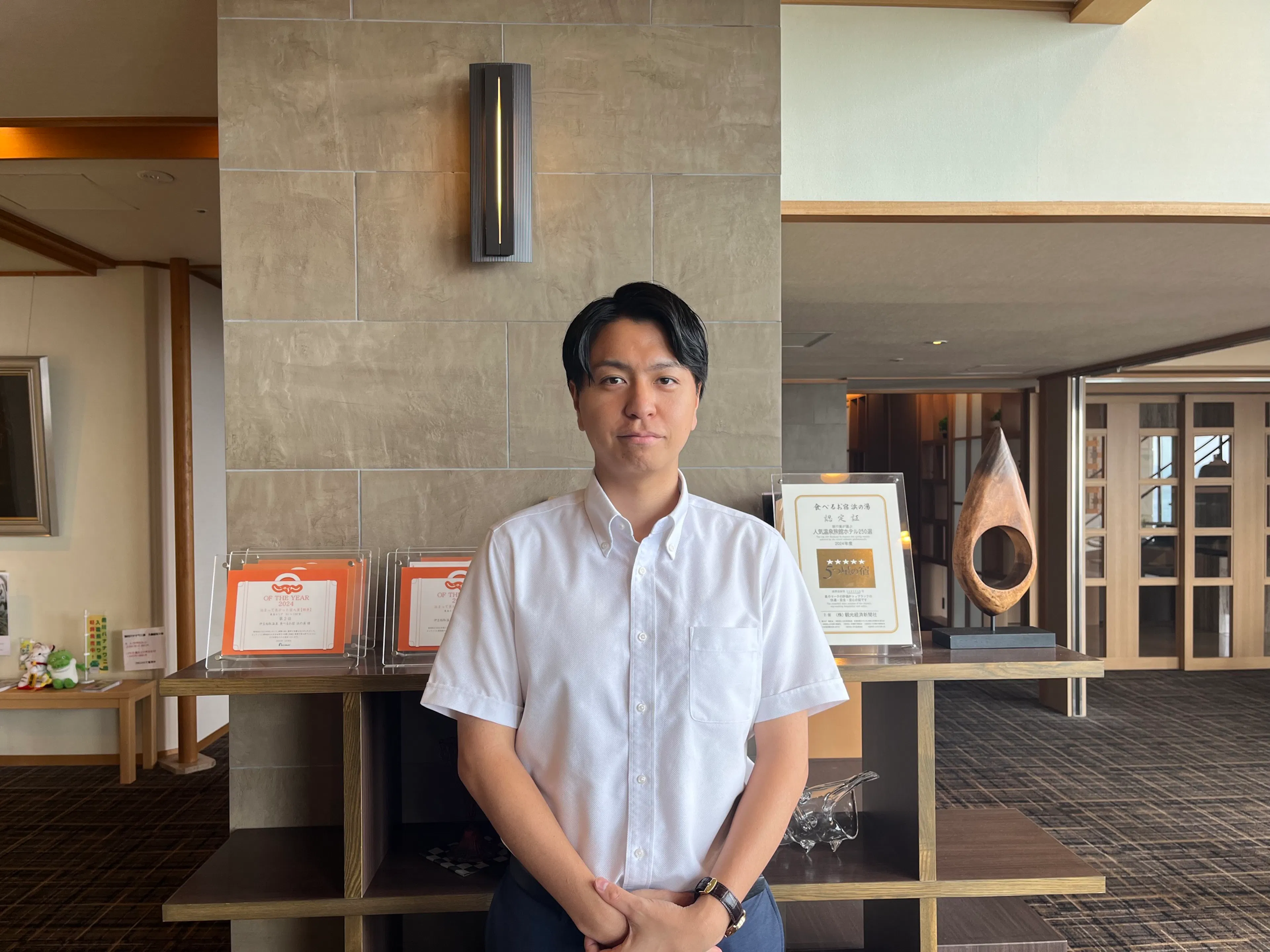
We spoke with Hidetaka Yonemoto, who handles corporate planning in the Hotel Division, about the background to adoption and what's changed on the ground. (Interviewer: Ukeda, Reiwa Travel)

Ready to try NEWT Chat for yourself?
The free trial needs no credit card. See adoption results and pricing details in the guide.
Not a capsule hotel with everything — a comfort built on having nothing you don't need
— Could you start by telling us about your own role, and the brand concept behind nine hours?
Yonemoto: My role is corporate planning. I work on raising performance and, for the sake of guest experience, improving the quality of what we'd call our product — both the digital and the analog sides. The Hotel Division runs on about five people in total, and for rolling out systems such as this AI chat, I'm mainly the point of contact.
nine hours is a brand that has been carefully designed and nurtured from its concept up. The things every guest uses — the bed, the shower, the soap — we make a point of keeping high quality, while things not every guest uses, like a TV or a fridge, we've cut entirely. By providing only what's truly necessary at a high standard, we're trying to deliver both real value for money and comfort. Capsule hotels tend to come with everything, but we're aiming for the opposite — stripping everything away is exactly what lets guests sleep comfortably.

About 60% Japanese and 40% international guests, mostly in their 20s and 30s, from a wide range of backgrounds
— Could you tell us about your guests — their nationalities and age range?
Yonemoto: Roughly speaking, about 60% of our guests are Japanese and about 40% are international. The international guests come from a wide range of regions — mainly Asia, but also Europe and North America.
Guests in their 20s and 30s make up the core volume, gradually tapering off from the 40s on. Many guests prioritize price, location and convenience, and the mix varies — people in town for an event or a concert, or on a business trip with a limited accommodation budget.
What we track is cleanliness — a philosophy of never changing the service by guest
— What philosophy guides how you handle guests?
Yonemoto: Our basic design is that a guest's stay is self-contained. Most of our recent properties have a nearly unmanned front desk — there's staff behind the scenes, but guests can go through their stay without meeting anyone unless they need to. What we care about most, so that guests can stay comfortably, is the cleanliness of the facility. Internally we also put weight on cleanliness-related reviews, and each property's manager is responsible for keeping that score up.
We're also consistent about not wanting to vary the service by guest. The more case-by-case handling we do, the more that creates differences between guests. We hold the view that we'd like to reduce person-dependent, individual handling, and for anything that can be systematized, we want to bring in a system.
To let guests complete their stay on their own, we try to provide detailed pre-arrival information on OTAs. But our FAQ isn't yet properly in place. That sense of a gap was one of the reasons we adopted AI chat.
Small teams meant we couldn't reply to emails right away
— What challenges did you face before adopting NEWT Chat?
Yonemoto: Each property is run by a small team. We take inquiries mainly by email, so they came in mostly as emails to each property. But during the day, staff are too busy to reply, so it ended up falling to the night-shift staff, who have relatively more time, to work through a backlog of replies.
From a guest's perspective, not getting a reply quickly isn't a great experience for what's meant to be a service business. We genuinely wanted to respond in a timely way, and that was a real problem for us.

Ready to try NEWT Chat for yourself?
The free trial needs no credit card. See adoption results and pricing details in the guide.
The deciding factors: a simple admin screen and an easy setup
— We understand you compared other services too. What made you choose NEWT Chat?
Yonemoto: What decided it was that the admin screen was simple, and adding it to our site was easy. When I checked with the team that builds our website, they told me it was basically just embedding it, so the barrier to entry was low, and we figured it was worth trying.
"Can I use just the shower?" — latent needs the data surfaced
— Once you actually started using it, what did you notice?
Yonemoto: What surprised us was NEWT sharing that their analysis showed a large number of guests asking whether they could use just the shower. We'd assumed it was obvious that we offer showers, but clearly that wasn't getting across, which was a wake-up call. We're also seeing a lot of detailed questions — check-in and check-out times, whether airport priority pass lounges can be used — which are turning into hints about what information is missing from our official site.

Over 1,000 inquiries a month across all properties — and international guests can now ask in their own language
— Has the volume or content of inquiries changed since adoption?
Yonemoto: Separately from the chat, we receive more than 1,000 inquiries a month across all properties. NEWT has told us that inquiries tend to settle down as the FAQ gets fuller, so we plan to compare the data from before and after adoption. More than the number itself, we want to see how the quality of the inquiries changes.
I imagine our international guests had been carefully writing emails in English out of consideration for us. Now that they can communicate in their own language, I think it's eased the stress on both sides.
Answering with the same quality regardless of who's on duty — what we expect from AI
— Could you tell us more about the benefits you're feeling from adoption?
Yonemoto: With email, the response inevitably varies depending on who replies. We have a policy of not varying the service by guest, but this is a place people are staying, so it's natural for them to feel some anxiety, and there are always moments where we genuinely need to answer properly. Being able to hand that off to AI and get a consistently stable quality is a huge appeal to us.

Hoping for booking-system integration next — and a strong recommendation for properties going lean
— Finally, could you tell us your plans going forward, and how you'd recommend this to others in the industry?
Yonemoto: Going forward, what I'm hoping for is integration with our booking data, so things like handling a date change could eventually be automated too. On site, I also think it'd be interesting to have voice handle this — just speaking to a speaker and getting an answer back when something's unclear. And because we operate multiple properties, it would help even more to have a way to apply a change in information — such as starting to charge for amenities — to all properties at once.
If I were recommending this to others in the industry, I'd especially recommend it to properties genuinely run with the bare minimum of staff. It's a great fit precisely because there's no room for case-by-case handling. The split between properties that put hospitality front and center and those that are going lean is only going to widen from here, so for those going lean in particular, I think it's worth adopting AI early, learning from the questions that come in, and using that to keep updating your property. Just try it — you're bound to get something out of it.
— AI answers guests' questions with the same quality, and voices that used to go unheard are now being picked up. It's been a genuine pleasure to hear this. Thank you so much for your time!
Note: Information about the services and the property in this article reflects the time of the interview and may differ today.