Hello, I'm Yuki Sodeoka from NEWT AI Marketing. In this article, I'll walk through how hotels and ryokan can use IVR (interactive voice response) to automate first-line phone handling.
Around the late afternoon, when check-in begins, is also when the front desk phone tends to ring most. Do you keep a guest at the counter waiting while you pick up, or let the call go and risk losing a booking? Either way, something is lost.
What does IVR actually do for a hotel or ryokan? It takes on the first line of phone handling: answering routine questions such as opening hours and directions with recorded guidance, routing calls by purpose, and taking calls that come in after hours. How much it helps depends on the mix of calls you receive. The more routine questions and after-hours calls a property gets, the less often the front desk will need to pick up the phone.
Adoption takes five steps: take stock of your calls, decide what to automate, design the routing scenarios, run a trial, and roll it out starting with certain hours.

Hiroki UkedaExecutive Officer, CBO, Reiwa Travel
Joined Loco Partners in 2018, leading the launch of its vacation-rental (minpaku) business—listing 600 properties a year and winning the company's annual MVP award. He went on to lead a 7-person new-business sales team in eastern Japan and managed major foreign-owned hotel chains in the Tokyo metropolitan area. In April 2020 he co-founded TASTE LOCAL and drove its growth, and joined Reiwa Travel as an Executive Officer in 2021.
Ready to try NEWT Voice for yourself?
The free trial needs no credit card. See adoption results and pricing details in the guide.
Three phone-handling challenges hotels and ryokan face
The problem is less the number of calls than the hours when there aren't enough people to answer them.
In February 2025, the Japan Tourism Agency surveyed lodging businesses and asked 339 facilities with a lodging department when they run short of staff (Japan Tourism Agency, Survey on Recruitment and Development of Human Resources in the Lodging Industry, FY2024 project, in Japanese). 23.9% said they are "always short-staffed," 36.0% said "in peak season," and 15.9% said "mornings and evenings." Nearly a quarter of facilities have no slack in their lodging department staffing at any time of year.

Face-to-face guests and phone calls arrive at the same time
Around check-in, guests at the counter and calls like "We're on our way" or "Do you have parking?" tend to overlap. Even a call of a few minutes breaks concentration each time you pause and resume a check-in, which leads to missed details in registration or room assignments.
Morning and evening calls are easy to miss
Booking calls come in mornings and evenings too, whenever it suits the guest. In the survey, 15.9% of facilities said they are short-staffed in the mornings and evenings. If you rely on voicemail and call back the next day, the guest may book somewhere else before you do.
No room for a dedicated phone person
At properties where the front desk runs with only a few people, it is hard to dedicate anyone to the phone. Rather than trying to reduce the number of calls, it works better to design things so that staff go to the calls that really need a person.
Types of inquiries IVR can automate
Calls to hotels and ryokan tend to follow set patterns. Splitting them into calls that can end automatically, calls you can point to the web, and calls a person should take from the start makes the design much easier.

Questions voice guidance alone can answer
Check-in and check-out times, whether there is parking, large bath hours, directions from the nearest station. For questions whose answers don't change, recorded voice guidance means there is no need to pass the call to staff. For information that changes by season, such as a shuttle bus that stops running in winter, a service that lets you change the wording from an admin screen lets your own team keep it current. That can be a deciding factor when you choose a service.
Calls you can point to the web by SMS
Some services can automatically send the booking page URL or a map link by SMS during the call. It is more accurate than reading out an address or availability over the phone, and the guest keeps it for later.
Calls a person should take
Complaints, urgent calls such as a guest feeling unwell, complex requests, and calls from regular guests lead straight to dissatisfaction or lost business if you automate them. Whatever you design, keep a path where pressing a number connects the caller to staff. There is no need to chase an automation rate. The goal is to make sure a person can answer the calls that need one.
Designing call routing for inquiries before, during, and after a stay
Designing your routing starts with counting the calls your property receives.
Log the purpose of incoming calls for one to two weeks
Four categories are enough: before the stay (bookings, availability, plan questions), just before and on the day (arrival time, directions, same-day cancellations), after the stay (lost items), and sales calls. Simply keeping a daily tally will show you how your calls are distributed.
Sort the logged purposes by how often they come in and whether the answer is fixed, and you will know what to automate first. The candidates are the frequent calls with fixed answers.

Keep the menu short and lead with the purpose
More menu options cover more cases, but long guidance gets cut off midway. A realistic start is to pick the two or three most frequent purposes and connect everything else to staff with "Please hold." Guidance that states the purpose first, like "For reservations, press 1," should be easier to follow. After launch, unexpected purposes will flow into "Other," so check them with call recordings or transcripts and add options as you go.
Use separate scenarios for business hours and after hours
One example is to focus on routing during the day and, at night, send the booking page URL by SMS and record the caller's request. The same mechanism can switch the guidance on closed days or when you are fully booked. Whether your team can change these switches from an admin screen is worth checking when you choose a service. If every change requires a request to the vendor, it becomes a hassle.
Customer case: fewer calls passed to the front desk
In Shiga Prefecture, WASUKI BASE Biwako runs two brands: VILLA STYLE for small groups and GUEST HOUSE for larger groups. Before adoption, inquiries came mainly by phone and through the contact form on the official site, and only the manager and staff could handle them. Inquiries piled up during the hours when staff were busy with cleaning and check-in, and there were times they could not reply right away.
After adopting NEWT Chat, inquiries to the front desk (phone and form) fell by around 90%. Natsumi Inamine, who handles sales and marketing, describes the calls that went away like this.
Once we actually looked into it, it turned out there had been a fair number of phone inquiries, right down to detailed questions like check-in and check-out times, and that's what settled down significantly.
— Natsumi Inamine, "WASUKI BASE Biwako" (Tomoiki Resorts Shiga Co., Ltd.) (from the customer case)
What WASUKI BASE Biwako adopted is a chat on its official website, so the channel differs from voice IVR. Still, the calls that went away overlap with the routine questions IVR handles: questions with fixed answers, like check-in and check-out times.
On the other hand, questions that need an on-the-spot judgment, such as whether guests can bring a watermelon for suikawari or an inflatable pool, are deliberately left to staff rather than answered by the chat. Drawing a line between what is answered automatically and what is left to people applies equally to IVR design.
Inquiries to the front desk down about 90%: how AI took over routing guests between two brandsTomoiki Resorts Shiga Co., Ltd. runs two distinctly different brands in Shiga Prefecture — the small-group-focused 'WASUKI BASE Biwako VILLA STYLE' and the group-focused 'GUEST HOUSE' — and was swamped with phone and form inquiries. After adopting NEWT Chat, inquiries to the front desk fell by around 90%. We asked about training the AI to route guests between the two properties./en/aichat/case/wasuki-base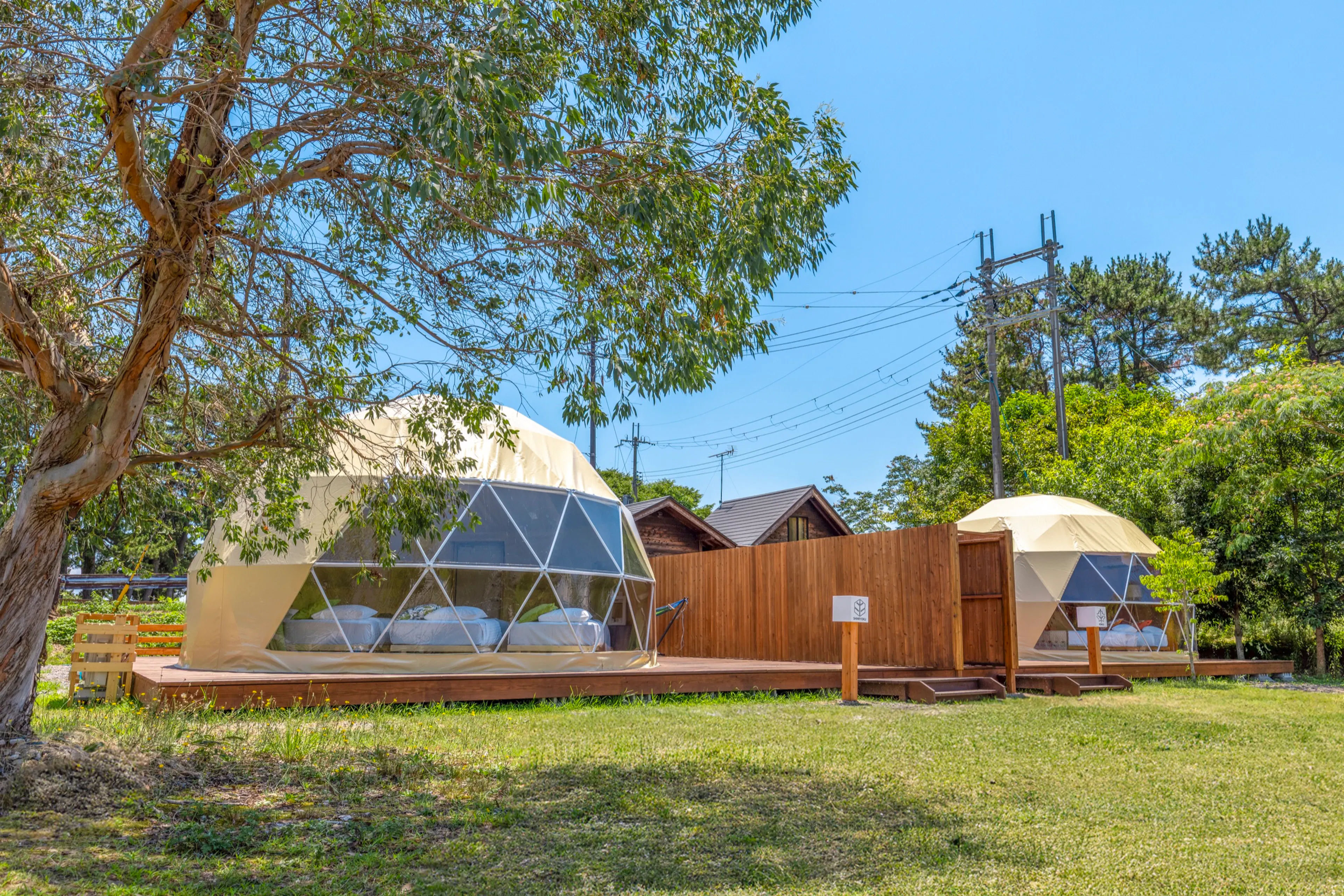
Ready to try NEWT Voice for yourself?
The free trial needs no credit card. See adoption results and pricing details in the guide.
IVR selection checklist for hotels and ryokan
Decide what to check on cost and operations before narrowing candidates by feature lists. Your comparisons will stay consistent.
Compare the total of setup, monthly, and usage fees
Many services charge a combination of a setup fee, a monthly base fee, and usage fees per call or SMS. The more calls a property receives, the larger the usage portion becomes, so comparing monthly fees alone can mislead you. Ask for quotes based on the monthly call volume and average call length from your call log, and compare the totals. Prices get revised, so it helps to have the date written on each quote.
Features to check
- Routing by purpose and voice guidance (whether synthesized speech is enough or you need recorded human voice)
- Automatic SMS (booking page, map)
- Switching scenarios by business hours, closed days, and time of day
- Whether your team can change settings from an admin screen
- Call recording and transcription (if you record, say so in the guidance)
- Scope of foreign-language support (playing guidance only, or responding in that language)
- Integration with your booking system or PMS (if you automate taking bookings)
Test it on site before you sign
Check two things in the trial. Can a staff member who is not comfortable with IT add one menu option? When staff call in as a guest, is the guidance short enough and easy to follow? For the full rollout, switching to IVR only at night or on closed days first, then extending it to daytime after seeing how guests respond, keeps the risk of a failed switchover small.
Types of IVR for hotels and ryokan: touch-tone vs. AI-based IVR
Besides touch-tone IVR, where callers press numbers to choose a purpose, there is AI-based IVR, which uses speech recognition and speech synthesis to respond in conversation.
| Touch-tone | AI-based | |
|---|---|---|
| What the guest does | Presses numbers to choose a purpose | Speaks to explain their purpose |
| First-line scope | Routing and routine guidance | Answering questions, taking down requests |
| What you prepare | Menu design and voice guidance | Source information for answers (FAQs and answers) |
| Suited to | Properties with a few, well-defined call purposes | Properties with a wide range of inquiries |
Handling foreign-language calls changes
With multilingual support that only plays guidance in other languages, callers are connected to Japanese-speaking staff once they choose a number. Some AI-based services recognize speech in other languages and answer in that language, so they can respond to calls from overseas during hours when staff cannot pick up. Multilingual support needs to be prioritized across touchpoints beyond the phone, too.
Multilingual Support for Hotels and Tourism: If You Start With Four Languages, Where Do You Begin?With over 40 million inbound visitors a year, where should hotels and ryokan begin with multilingual support? Drawing on JNTO and tourism-agency data, we lay out the case (and the limits) for four languages, and how to choose tactics across three touchpoints—static signage, the front desk, and the web./en/aichat/column/multilingual-support-4-languages
Get your FAQ in order first
The quality of AI-based answers depends on the quality of the information your property provides. If you adopt it before writing down common questions and answers, many questions will go unanswered. Using touch-tone IVR to understand your call distribution, building your FAQ from the questions that flow into "Other," and then expanding to AI-based IVR means less rework.
Summary: IVR adoption at hotels and ryokan starts with taking stock of your calls
In the first week, count your calls and their purposes in four categories. Choose a service after that. Once you know the share of routine questions and sales calls, you can estimate how much room there is to automate. Start with a short menu, try it at night first, and extend it to daytime.
After launch, track two numbers each month: calls completed automatically and calls transferred to staff. Put them next to the pre-adoption counts from your call log, and you can judge whether IVR is worth its cost.
Automating phone handling at hotels and ryokan with NEWT Voice
NEWT Voice is a service in which AI answers incoming calls and connects the caller to staff when needed. Of the two types, touch-tone and AI-based, it is AI-based IVR: the AI takes routine questions and passes the calls that need a person to staff, sharing the work over the phone.