
Guide
Quand partir au Japon
Quatre saisons, quatre voyages radicalement différents. Planifiez votre séjour grâce aux données climatiques mensuelles et aux conseils de nos experts.
Le Japon est un pays de quatre saisons. La période de votre visite transforme tout ce que vous vivez.
L'archipel japonais s'étend sur environ 3 000 km du nord au sud, d'Okinawa la subtropicale à Hokkaido la subarctique. En prenant Tokyo comme référence, la température moyenne annuelle avoisine 15,8 °C pour environ 1 600 mm de précipitations par an. Le printemps (mars à mai) apporte les cerisiers en fleurs et la verdure naissante ; l'été (juin à août) éclate en festivals et escapades balnéaires ; l'automne (septembre à novembre) déploie des feuillages flamboyants et une cuisine de saison au sommet ; l'hiver (décembre à février) offre des bains onsen fumants et une neige poudreuse de renommée mondiale. Une même destination révèle un visage totalement différent selon la saison. Dans ce guide, nous détaillons les données climatiques mensuelles de Tokyo, les temps forts de chaque saison et les circuits NEWT Bespoke recommandés pour chaque période.
Saisons
Les temps forts de chaque saison
Printemps
Mars – Mai
Le printemps japonais se définit par les cerisiers en fleurs. À Tokyo, les sakura atteignent leur pleine floraison entre fin mars et début avril, attirant les foules au parc Ueno et le long de la rivière Meguro. De fin avril à début mai, les spectaculaires glycines géantes du parc floral d'Ashikaga, dans la préfecture de Tochigi, retombent en cascades mauves et blanches. Les températures diurnes oscillent entre 15 et 22 °C, faisant du printemps l'une des saisons les plus agréables pour explorer le pays à pied.
Points forts
Hanami (Tokyo, Kyoto, Nara), glycines du parc Ashikaga, festival de printemps de Takayama (14-15 avril), faible affluence avant la Golden Week
Circuits recommandés
Route Dorée du Japon / Kyoto Culture Profonde
Été
Juin – Août
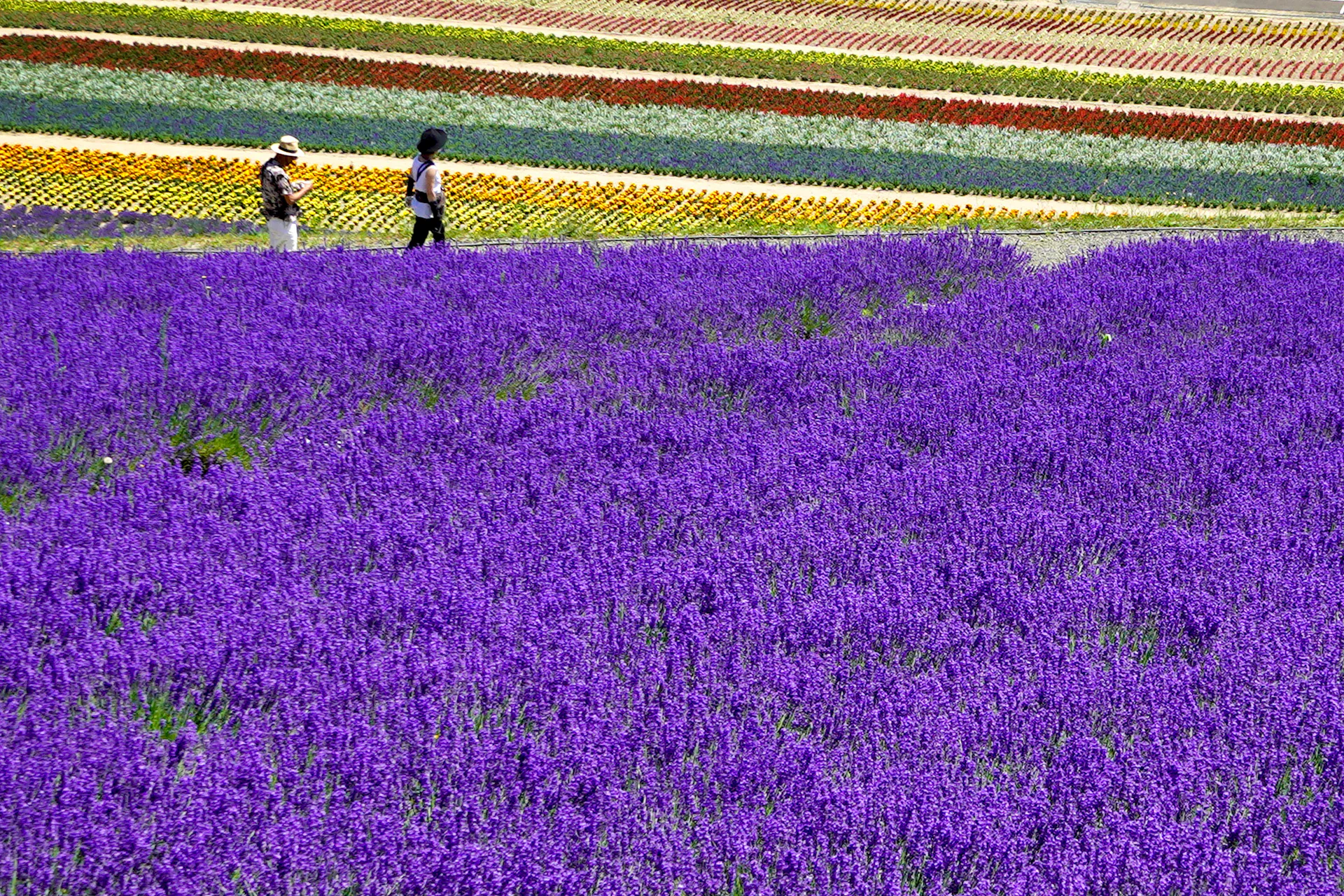
Juin marque le début de la saison des pluies (tsuyu), qui dure généralement du 7 juin au 19 juillet dans la région de Tokyo. Une fois les pluies dissipées, le Japon entre en pleine effervescence festive. Le Gion Matsuri de Kyoto (1er-31 juillet) compte parmi les trois grands festivals du pays, aux côtés du Tenjin Matsuri d'Osaka (24-25 juillet) et du Nebuta Matsuri d'Aomori (2-7 août). Pour fuir la chaleur, les champs de lavande de Furano à Hokkaido atteignent leur apogée début à mi-juillet, tandis que les îles Kerama à Okinawa offrent des eaux parmi les plus limpides du Pacifique.
Points forts
Gion Matsuri, Tenjin Matsuri, Nebuta Matsuri, feux d'artifice de la Sumida (dernier samedi de juillet), champs de lavande de Hokkaido, plages d'Okinawa
Circuits recommandés
Niseko & Aventure Hokkaido / Okinawa Premium
Automne
Septembre – Novembre
L'automne est la saison des feuillages et de la gastronomie. La vague de couleurs des koyo débute à Daisetsuzan, Hokkaido (mi-septembre), traverse Nikko (mi à fin octobre) et atteint Kyoto (mi-novembre à début décembre). Les îles d'art de Setouchi — Naoshima, Teshima et Inujima — se découvrent idéalement sous le ciel doux de l'automne. Côté table, les matsutake, le sanma (balaou du Pacifique), le riz nouveau et les châtaignes japonaises sont à l'honneur. Les températures diurnes se maintiennent entre 15 et 25 °C.
Points forts
Feuillages d'automne (Nikko, Kyoto, Arashiyama), Triennale de Setouchi (session d'automne), fête Shichi-Go-San, délices de saison (matsutake, riz nouveau)
Circuits recommandés
Kyoto Culture Profonde / Îles d'Art de Setouchi
Hiver
Décembre – Février
L'hiver transforme le Japon en paradis pour amateurs de sources chaudes et de neige. Le pays compte plus de 3 000 stations thermales, et se baigner dans un rotenburo en plein air tandis que les flocons tombent autour de vous reste une expérience inoubliable — Hakone, Arima et Beppu figurent parmi les plus réputées. Niseko, à Hokkaido, reçoit environ 15 mètres de cumul neigeux annuel, ce qui en fait l'une des premières destinations poudreuse au monde. Les grandes villes s'illuminent grâce aux installations de Tokyo Midtown et du Kobe Luminarie, tandis que la période de décembre à janvier, moins fréquentée par les visiteurs internationaux, dévoile un Japon plus intime et serein.
Points forts
Séjours onsen (Hakone, Arima, Beppu), neige poudreuse de Niseko, illuminations hivernales, Festival de la neige de Sapporo (début février)
Circuits recommandés
Onsen & Gastronomie / Niseko & Aventure Hokkaido
Climat
Climat mensuel de Tokyo
| Mois | Température | Précipitations | Remarques |
|---|---|---|---|
| Janvier | 1–10 °C | ~60 mm | Journées sèches et ensoleillées. Saison du hatsumode (visite des sanctuaires du Nouvel An). Vêtements chauds indispensables. |
| Février | 2–11 °C | ~60 mm | Mois le plus froid de l'année. Les pruniers commencent à fleurir. Festival de la neige de Sapporo. |
| Mars | 5–14 °C | ~120 mm | Les températures remontent. Les cerisiers de Tokyo s'ouvrent fin mars. |
| Avril | 10–19 °C | ~130 mm | Pleine floraison des cerisiers. Temps idéal pour le hanami. Peu de monde avant la Golden Week. |
| Mai | 15–24 °C | ~140 mm | Verdure éclatante partout. La Golden Week (29 avril – 5 mai) est le pic des voyages domestiques. |
| Juin | 19–27 °C | ~170 mm | Début de la saison des pluies (tsuyu). Hausse de l'humidité. Hortensias au sommet de leur beauté à Kamakura et Hakone. |
| Juillet | 23–31 °C | ~160 mm | Chaleur et humidité après la fin du tsuyu. Gion Matsuri à Kyoto. Début de la saison des feux d'artifice. |
| Août | 24–32 °C | ~150 mm | Mois le plus chaud. Les vacances d'Obon (13-16 août) attirent les foules nationales. Festivals Nebuta et Awa Odori. |
| Septembre | 20–28 °C | ~220 mm | Saison des typhons. Chaleur persistante en début de mois ; agréable à partir de fin septembre. |
| Octobre | 14–23 °C | ~200 mm | Retour du ciel dégagé. Apogée des feuillages à Nikko. L'un des meilleurs mois pour voyager. |
| Novembre | 8–17 °C | ~100 mm | Pic des feuillages d'automne à Kyoto (mi à fin novembre). Matins et soirées frais. |
| Décembre | 3–12 °C | ~60 mm | Saison des illuminations. Les fêtes de fin d'année attirent du monde, mais début décembre reste un créneau privilégié. |
Conseils
Conseils de planification
Réservez au moins 6 mois à l'avance
Les hébergements de Kyoto pendant la saison des cerisiers (fin mars à début avril) et des feuillages d'automne (novembre) affichent complet six mois à l'avance. Les ryokan avec onsen privatif partent en premier. NEWT Bespoke recommande de commencer la planification au moins six mois avant vos dates de voyage pour garantir les meilleures options.
Évitez la Golden Week (29 avril – 5 mai)
La Golden Week est la plus longue période de vacances au Japon ; transports et hébergements sont pris d'assaut par les voyageurs nationaux. Les sièges réservés du Shinkansen peuvent être épuisés un mois avant. Si vos dates sont flexibles, décaler d'une seule semaine en amont ou en aval change radicalement la disponibilité et les prix.
Les intersaisons offrent le meilleur rapport qualité-prix
Mi à fin mai, octobre et début décembre se situent entre les pics de fréquentation. Les foules se dissipent, les tarifs hôteliers baissent et le temps reste excellent. Ces périodes intermédiaires offrent le meilleur équilibre entre confort, coût et atmosphère locale authentique — parfait pour les voyageurs qui préfèrent un rythme plus détendu.
Préparez-vous aux écarts de température
Tokyo peut dépasser 35 °C en été et frôler 0 °C en hiver : bien choisir ses couches de vêtements est essentiel. Au printemps et en automne, des superpositions légères que l'on ajoute ou retire au fil de la journée sont la clé. La visite des temples implique souvent de retirer ses chaussures ; des modèles faciles à enfiler sont très pratiques. En juin, un parapluie compact est indispensable.
Tenez compte des variations climatiques régionales
L'hiver à Hokkaido descend à -10 °C et au-delà, tandis qu'Okinawa reste à 15-20 °C sur la même période. Même entre Tokyo et Kyoto, la floraison des cerisiers est décalée d'environ une semaine. Si votre itinéraire traverse plusieurs régions, chaque étape peut exiger des vêtements et un équipement différents. Votre concierge NEWT Bespoke tracera l'itinéraire optimal en tenant compte des conditions de chaque destination.
Nous trouvons pour vous la saison parfaite.
Un concierge NEWT Bespoke dédié conçoit un itinéraire entièrement personnalisé selon vos dates, vos centres d'intérêt et votre style de voyage. La consultation et la planification sont entièrement gratuites.
Réserver une consultation gratuite